

TREND: Colour Capping
It's easier than drenching – and more effective – so read on to find out if this almost-ombre paint effect is for you.

I’m not particularly trend-led when it comes to interior design. I’m a bit classic, a bit vintage, a bit tonal – and that’s all mostly because I know what I like and that’s what I’m having. Except it turns out that when I painted my sitting room two years ago, I was ahead of a style that didn’t even have a name at that point.
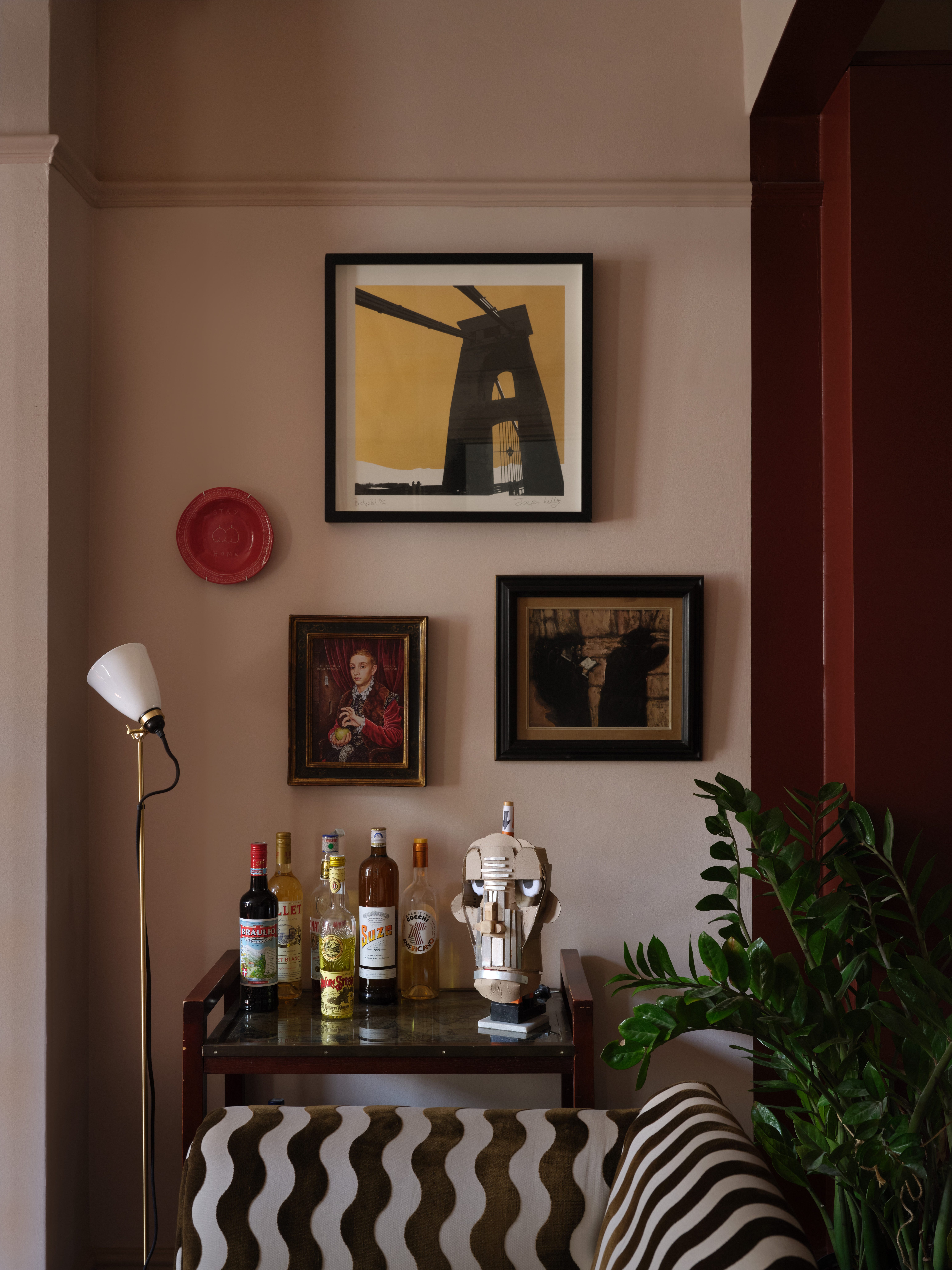
Benjamin Moore, one of the leading premium paint brands, with an impressive (or bewildering, depending on your point of view) offering of 3,500 colours, coined the phrase “colour capping”earlier this year and has just formally launched the concept in its A/W25 look book.
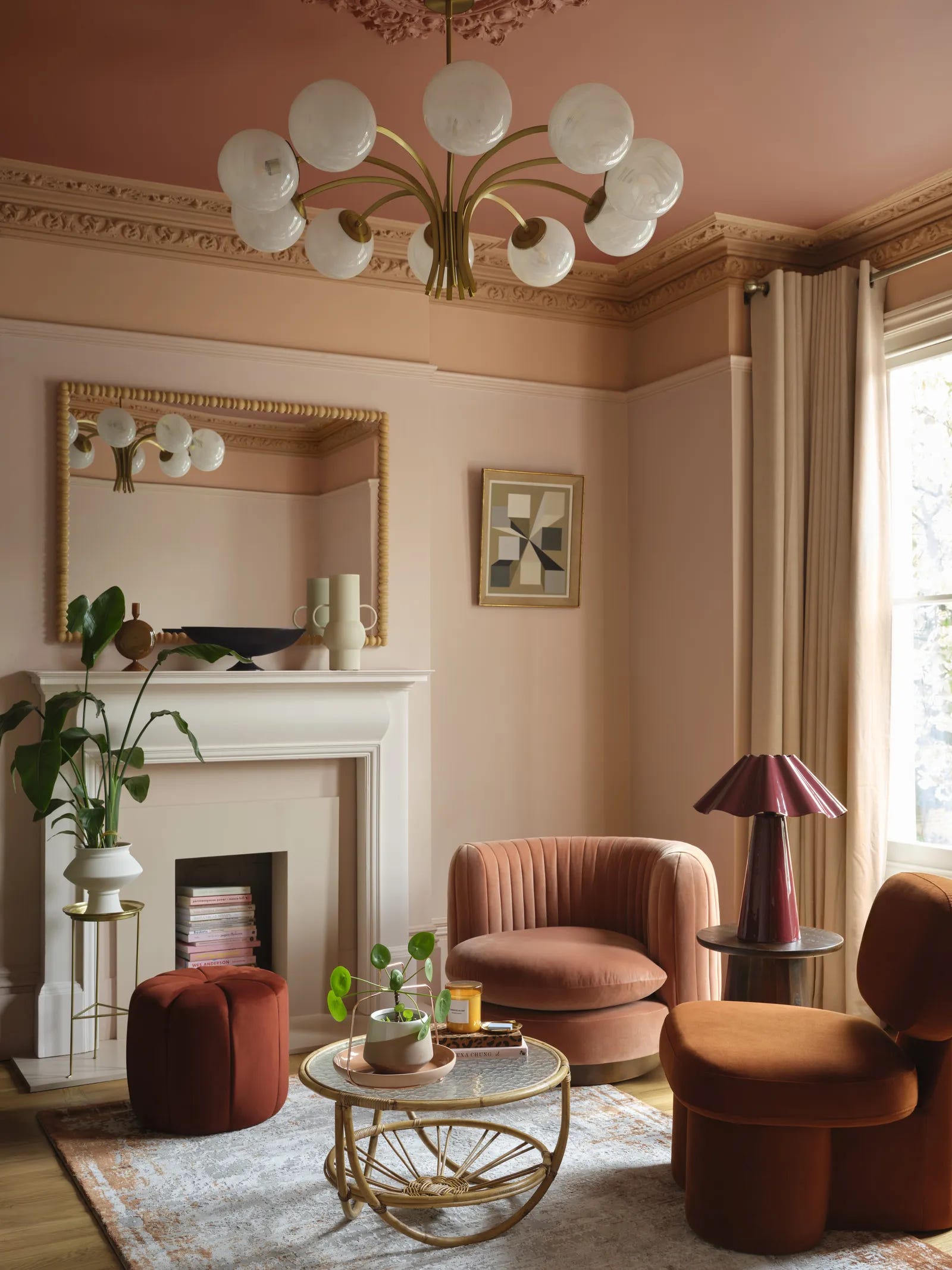
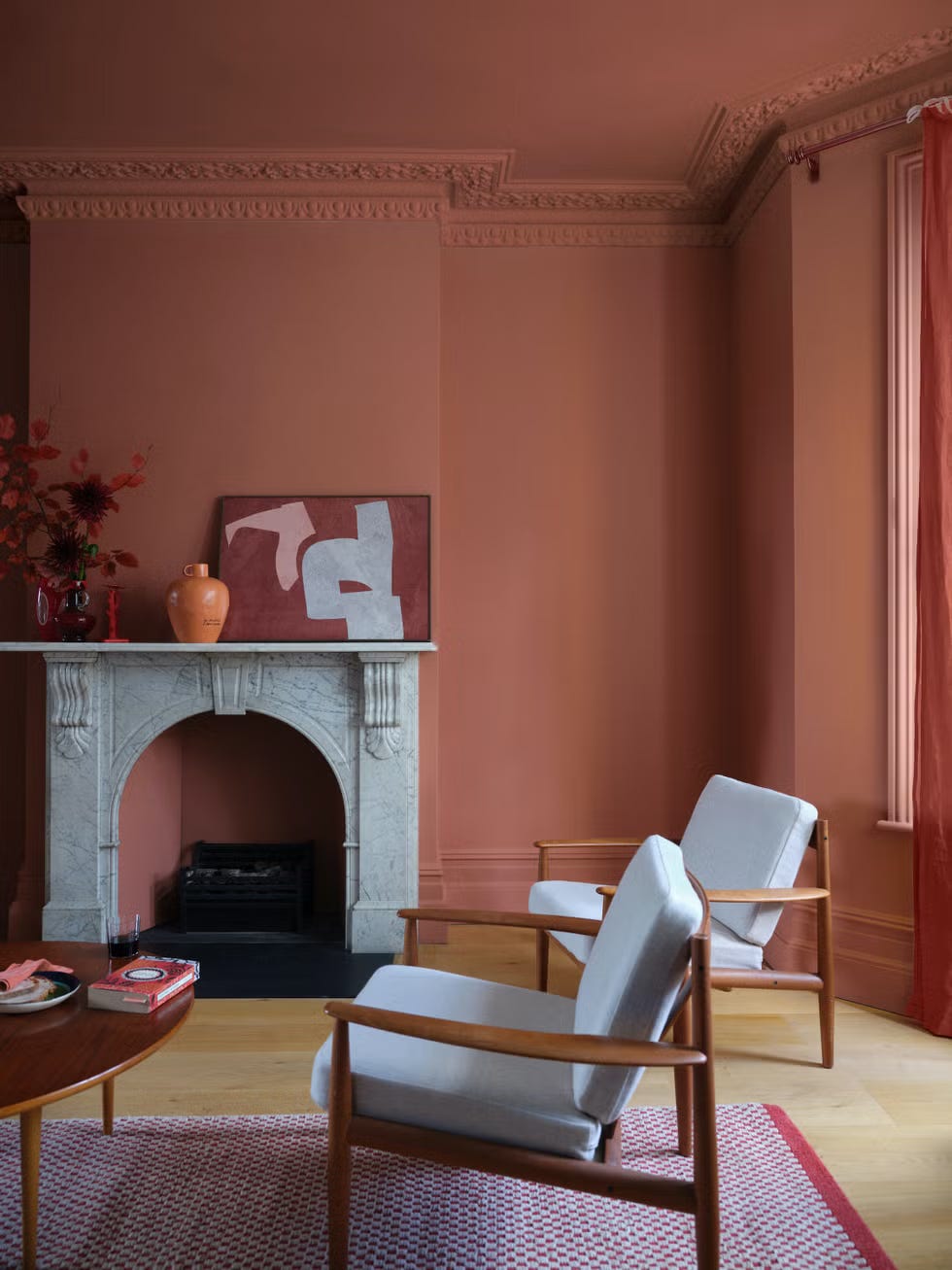
The idea is that you use multiple tones of the same colour, rather than drenching – which is covering everything in the same shade. Drenching is good for small, dark rooms, to add drama and create a wraparound cocooning sensation. When done in large rooms you need to really love the colour as it can feel overwhelming which makes it a big decision.
This colour drenched room below (Red Earth by Farrow & Ball) feels quite intense don’t you think? Colour capping would be easier to live with and would also highlight the plasterwork.
Drenching tends to be done in mid-range and dark colours, although when you do the same thing in a pale version it’s known as the gallery look, and does the same job of blurring the edges of a room to make it look cosier or grander, depending on which colour you use.
Colour capping is different and, arguably, easier but the effect is elegant and, as you have used a mix of colours, has more of a designer look to it.
It means starting with a lighter colour on the walls and taking the same shade deeper on to the ceiling, with the mid-tone on the cornicing (if you have it) and the rest of the woodwork if you want to emphasise the point.
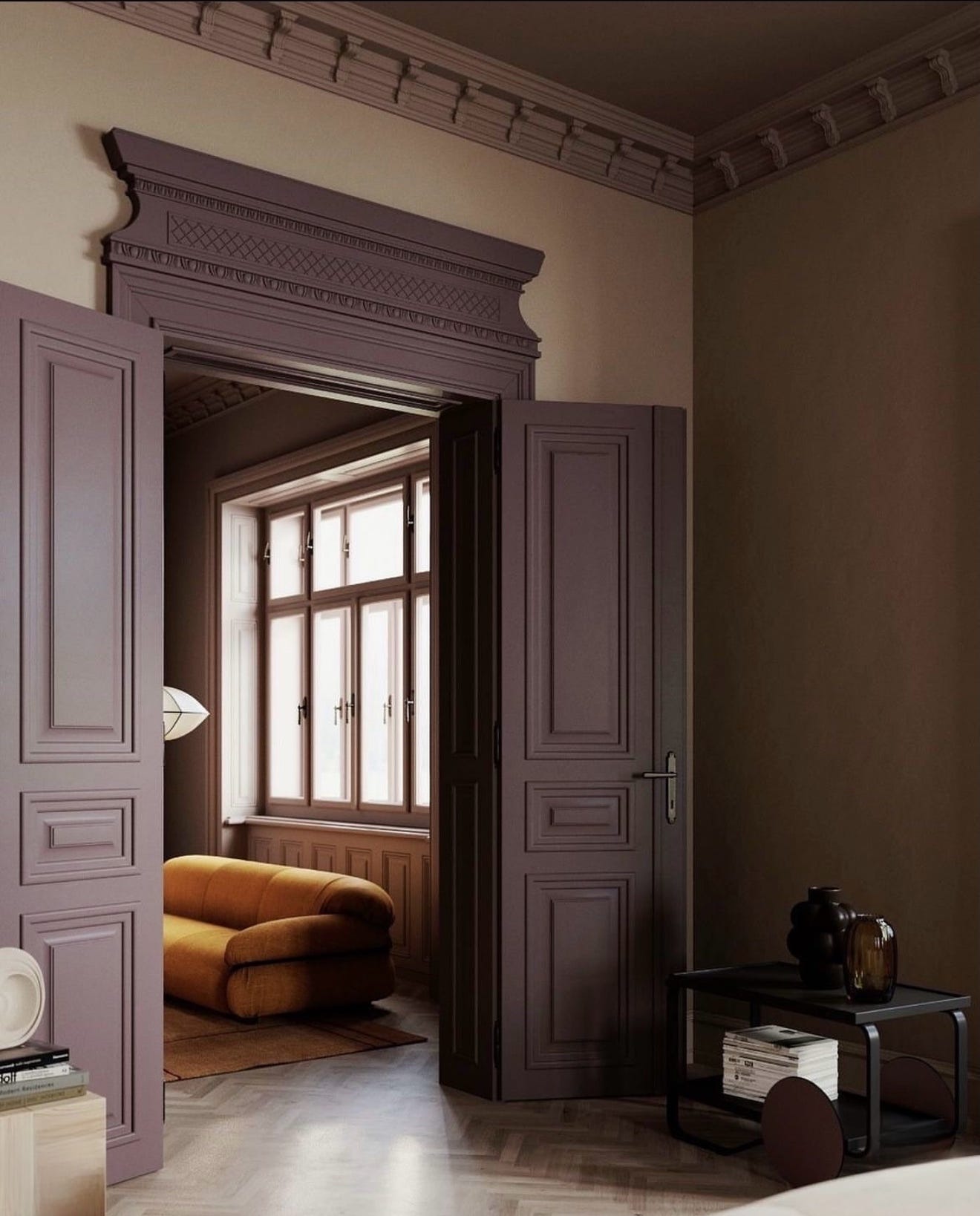
Most of us won’t have a room like the one above, but we will have doors, walls and ceilings, so the same principle applies. As long as the colours are related, this technique will work. And that’s the joy of it.
You don’t have to have fancy plasterwork, you don’t have to have high ceilings. You don’t even have to use strong colours, as the picture below demonstrates – which makes it perfect for rooms with low ceilings and no period features.
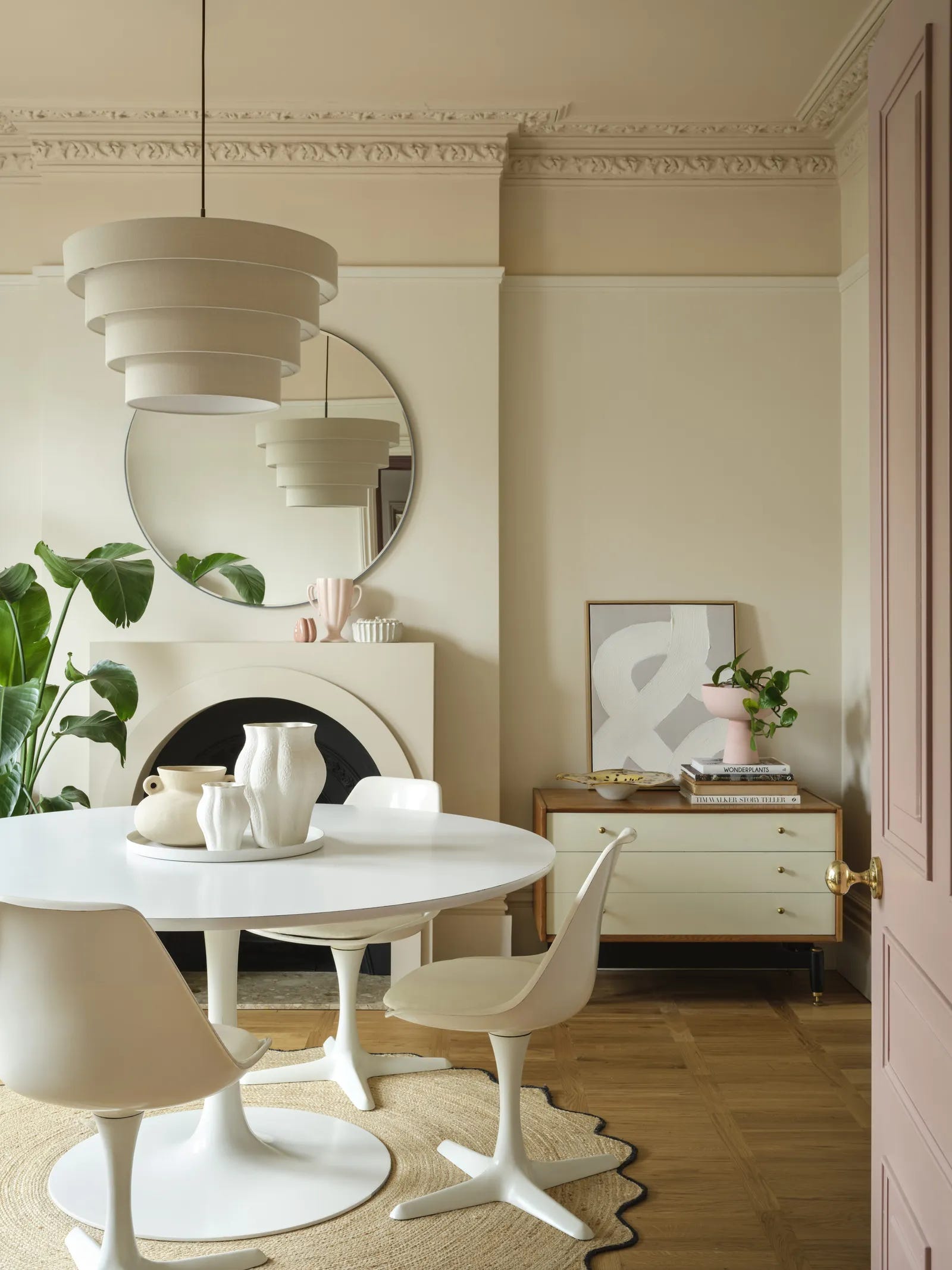
Read on to find out how to make colour capping work for you and see the one room in my house in Italy where the builders didn’t do it as we asked and you’ll see why it’s such a brilliant idea.